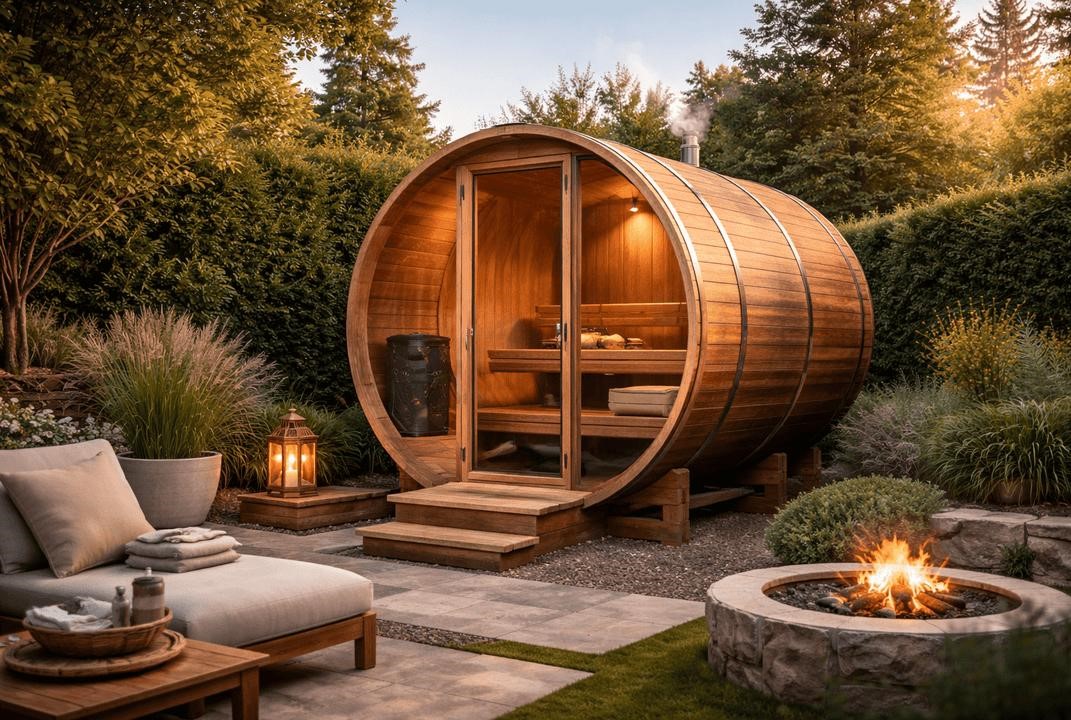
What Is a Sauna? Ancient Ritual Meets Modern Architecture
A sauna is a specialized room designed to be heated to elevated temperatures, creating an environment that promotes deep relaxation, cardiovascular conditioning, and full-body recovery.
Historically rooted in Finnish and Nordic traditions, saunas were originally timber structures built into earth mounds and heated with wood-burning stone fires. Today, modern residential saunas combine precision architectural millwork, non-toxic thermally modified hardwoods (such as Thermo-Aspen and Nordic Alder), and advanced electric or wood stoves to bring authentic löyly directly into residential master suites, home gyms, and landscaped gardens.
Löyly (pronounced low-loo) is the Finnish concept of soul-warming steam created when fresh water is ladled over red-hot volcanic rocks, momentarily elevating air humidity and softening thermal perception.
Key Health Benefits of Regular Sauna Bathing
Regular sauna bathing offers clinically validated physical and psychological benefits. When exposed to dry heat between 80°C and 90°C, the body initiates profound cardiovascular and endocrine responses.
1. Blood Circulation & Heart Health: Heat dilates peripheral blood vessels, improving arterial compliance and lowering resting blood pressure. The cardiovascular load mimics moderate aerobic exercise.
2. Musculoskeletal Recovery: Elevated blood flow flushes metabolic byproducts from overworked muscle tissue while soothing joint inflammation.
3. Stress Reduction & Sleep Quality: Hyperthermia stimulates endorphin release and down-regulates cortisol, promoting deeper Stage 3 slow-wave sleep cycles.
4. Skin Rejuvenation: Profuse sweating cleanses pores and accelerates cellular epidermal turnover.
Traditional Finnish vs. Infrared Saunas: The Deciding Factors
Choosing between a traditional sauna and an infrared cabin is the primary decision for prospective owners. While both offer therapeutic heat, their mechanisms and sensory experiences are distinct.
Traditional Saunas heat the surrounding ambient air to 160°F–200°F using an electric or wood stove stacked with high-density stones. This allows bathers to ladle water to create dynamic löyly steam and experience the classic hot-cold cycle.
Infrared Saunas use carbon or ceramic heating emitters to produce radiant electromagnetic waves that penetrate skin tissue directly at lower ambient temperatures (120°F–140°F). While popular for gentle recovery, they cannot produce löyly and lack the thermal stratification of authentic Finnish chambers.
Why a Home Sauna Is a Smart Long-Term Investment
Rather than relying on commercial gym saunas or costly day spa visits, a private residential sauna integrates effortlessly into your daily rhythm. You have complete control over hygiene, temperature, lighting, and seclusion.
From an architectural standpoint, a well-built sauna crafted from premium Nordic timber and architectural glass adds tangible aesthetic appeal and long-term resale value to a luxury home.
How to Choose the Right Sauna for Your Space
1. Capacity: Determine whether you need an intimate 2-person personal sanctuary or a spacious 4-to-6-person social cabin with multi-tiered benches.
2. Indoor vs. Outdoor Placement: Indoor saunas require moisture-resistant subflooring (tile or concrete) and adequate room clearance. Outdoor cabins require a level foundation (concrete slab or gravel pad) and durable weather-sealed roofing.
3. Wood Quality: Prioritize non-toxic, chemical-free timber such as Thermo-Aspen, Western Red Cedar, or Nordic Spruce that remains cool to the touch and resists warping under extreme thermal cycling.
Planning & Installation Checklist
Before ordering your sauna, verify these essential architectural parameters:
• Dedicated 240V Electrical Run: Ensure your main electrical panel has sufficient spare amperage (typically 30A to 50A for heaters rated 4.5kW to 9kW).
• Level Base: Verify subfloor or exterior pad has zero deflection and drains effectively.
• Ventilation Pathway: Plan for a low fresh-air intake near the heater and an elevated exhaust vent opposite the heater to guarantee continuous oxygen replenishment.
Frequently Asked Questions
Expert insights addressing common homeowner and architect inquiries.

Noah
AuthorEditorial contributor exploring sauna architectural design, outdoor wellness layouts, and Nordic timber craft.